

When to Go to Iceland: The Best Time for Every Kind of Adventure
There is no single best time to visit Iceland.
The right season depends on what you want to experience: endless summer light, snow-covered volcanoes, the Northern Lights, accessible Highlands or quieter landscapes with fewer visitors.
Iceland changes dramatically throughout the year. A valley that appears green and open in July may be covered in snow by January. A waterfall surrounded by autumn colours in September can become a frozen sculpture in winter. Even the same volcanic landscape can feel entirely different depending on the light, weather and season.
This guide explains when to go to Iceland based on weather, daylight, crowds and the experiences you want to include in your journey.
What Is the Best Time to Visit Iceland?
For most first-time visitors, June through August is the easiest time to explore Iceland. Summer brings the mildest weather, the longest days and the widest range of accessible destinations.
However, summer is not automatically the best choice for everyone.
Visit during:
- June to August for long days, open roads and easier access to remote landscapes.
- September to October for autumn colours, fewer visitors and the return of dark skies.
- November to March for snowy scenery, winter adventures and Northern Lights opportunities.
- April to May for increasing daylight, quieter attractions and the gradual arrival of spring.
Iceland is a year-round destination, but every season involves trade-offs. Summer offers accessibility and daylight but attracts more visitors. Winter delivers dramatic light and snow-covered scenery but also brings shorter days and more unpredictable travel conditions.
Iceland’s Weather: Expect the Unexpected
Weather should be part of every Iceland itinerary, regardless of the month.
Conditions can change quickly, sometimes within the same hour. Sunshine may give way to rain, low cloud or strong wind with little warning. Winter driving conditions can also occur during spring and autumn, not only during the coldest months.
Waterproof outer layers, warm clothing and a flexible schedule are therefore essential throughout the year.
Weather also affects certain activities, including helicopter flights. Pilots continually assess visibility, wind and local conditions, and routes may be adjusted when necessary. This flexibility is particularly valuable in Iceland, where a change of direction can reveal completely different terrain and better flying conditions.
Travellers planning a flight can also review Volcano Heli’s safety policy and cancellation policy before booking.
Visiting Iceland in Summer: June to August
Summer is the most popular time to go to Iceland, and for good reason.
The days are exceptionally long, temperatures are relatively mild and most major routes are accessible. In June, daylight continues through the night, creating the phenomenon commonly known as the midnight sun.
This extended light gives travellers more flexibility. You can spend longer at natural attractions, travel later in the day and experience Iceland’s landscapes under the soft light of the evening and early morning.
Why visit Iceland in summer?
Summer is particularly suitable for:
- Exploring the Icelandic Highlands.
- Hiking and outdoor adventures.
- Driving the Ring Road.
- Visiting remote valleys and mountain areas.
- Whale watching and birdwatching.
- Landscape and aerial photography.
- Experiencing the midnight sun.
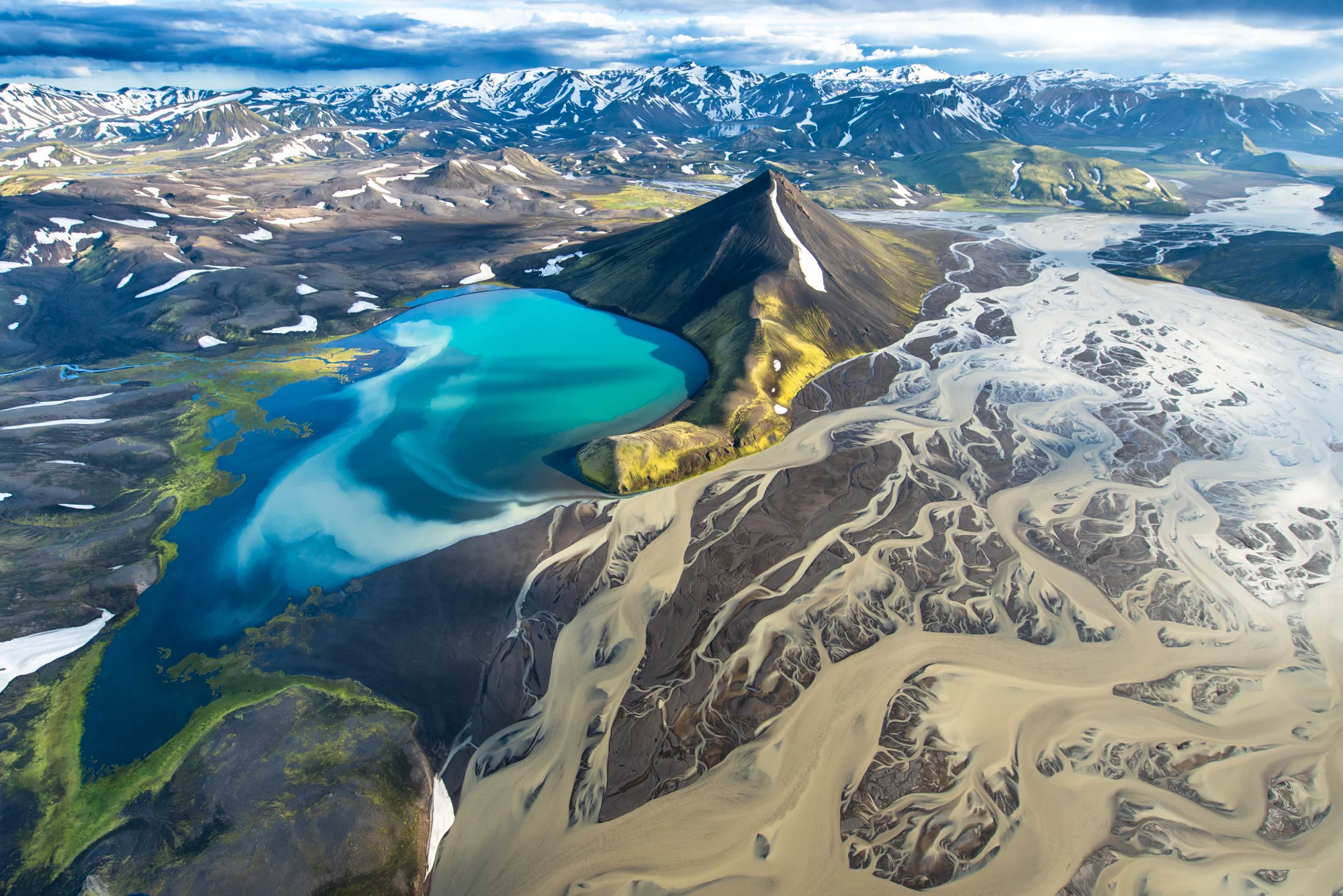
Some remote areas of Iceland, particularly in the Highlands, are primarily accessible during summer. From the air, these regions reveal colourful geothermal terrain, braided glacial rivers, volcanic plateaus and vast areas with little or no visible infrastructure.
A helicopter journey can also reduce the long driving times normally required to reach Iceland’s interior. Volcano Heli’s Highland Explorer, Highlands and Riverbraids Tour and Summer Glacier and Highlands Expedition are particularly well suited to this season.
Things to consider
June, July and August are peak travel months. Popular sites near Reykjavík, along the Golden Circle and on the South Coast can become busy.
Accommodation and rental vehicles are also in high demand, so advance planning is advisable.
For travellers seeking a more private experience, exploring Iceland from the air provides a very different perspective. It replaces crowded viewpoints and lengthy roads with direct access to volcanic systems, glaciers, waterfalls and remote terrain.
Visiting Iceland in Autumn: September and October
Autumn is one of Iceland’s most atmospheric seasons.
The nights gradually become darker, the summer crowds begin to disperse and shades of gold, red and brown spread across moss-covered hills and valleys. September often retains enough daylight for extensive sightseeing while offering the possibility of seeing the Northern Lights after dark.
It can be an excellent compromise for travellers who want variety.
Why visit Iceland in autumn?
Choose autumn for:
- Fewer visitors at major attractions.
- Changing colours across the landscape.
- Dramatic conditions for photography.
- A combination of daylight and darker evenings.
- Early Northern Lights opportunities.
- Potentially greater availability than in midsummer.
September is generally more accessible than late autumn, particularly for visitors planning to travel beyond Reykjavík and the South Coast. As the season progresses, snow and ice can begin to affect mountain routes and minor roads.
October is colder, darker and less predictable, but it can create remarkable aerial scenery. Low sunlight, early snow and fast-moving cloud systems add contrast and depth to Iceland’s volcanic landscapes.
Visiting Iceland in Winter: November to March
Winter reveals Iceland at its most dramatic.
Snow transforms lava fields, mountains and glaciers. Waterfalls may become partially frozen, daylight takes on a soft blue or golden quality, and long nights create opportunities to search for the Northern Lights.
It is an extraordinary season, but it requires realistic planning.
Why visit Iceland in winter?
Winter is best for:
- Snow-covered landscapes.
- Northern Lights excursions.
- Ice caves and glacier activities.
- Winter photography.
- Geothermal bathing in cold conditions.
- Reykjavík’s Christmas and New Year celebrations.
- Travelling with fewer tourists outside holiday periods.
The Northern Lights are visible only when the sky is sufficiently dark and clear. Their appearance depends on solar activity, cloud cover and local viewing conditions, so no tour operator can guarantee a sighting.
Winter also means fewer daylight hours and potentially difficult road conditions. Wind, ice or snowfall can interrupt plans, particularly outside the capital region. Travellers should check official weather and travel information regularly and avoid treating a winter road trip like a summer itinerary.
Seeing Iceland from above in winter
A helicopter flight offers a rare perspective on winter terrain. Snow makes volcanic craters, ridges, frozen rivers and geological fractures easier to distinguish from above.
Winter light can also be particularly rewarding for photographers. Because the sun remains low in the sky, shadows stretch across the landscape and reveal forms that can appear flatter under direct summer light.
Flight operations remain weather-dependent. Routes and departure times may need to change, but local pilots can use their knowledge of Iceland’s conditions to identify suitable alternatives.
Travellers looking for a seasonal experience can explore the Winter Ice Cave Expedition.
Visiting Iceland in Spring: April and May
Spring is a period of rapid transition.
Daylight increases quickly, snow begins to retreat from lower elevations and the country gradually prepares for summer. Waterfalls often carry more meltwater, migratory birds return and Reykjavík becomes noticeably livelier.
April can still feel wintry, especially outside the southwest. Snow, ice and sudden storms remain possible. By May, the days are much longer and conditions are generally more favourable, although Highland roads and elevated areas may still be inaccessible.
Why visit Iceland in spring?
Spring is a good choice for:
- Fewer crowds than in summer.
- Rapidly increasing daylight.
- Waterfalls strengthened by snowmelt.
- Birdwatching later in the season.
- Lower-elevation sightseeing.
- A balance between winter and summer scenery.
May is particularly attractive for travellers who want long days without the busiest summer period. It is still important, however, to avoid assuming that every remote road or hiking route will already be open.
Iceland Month by Month
January
January is cold, dark and quiet. It is suitable for winter photography, geothermal experiences and Northern Lights hunting. Daylight is limited, so itineraries should remain focused and flexible.
February
Daylight begins to increase, but winter conditions continue. February is a strong month for snowy scenery, ice caves and aurora-focused journeys.
March
March combines improving daylight with a distinctly wintry landscape. It can be a rewarding time for photography and outdoor winter activities before the season begins to change.
April
April is unpredictable. Longer days make sightseeing easier, but snow and cold weather remain possible. It is a transitional month suited to flexible travellers.
May
May offers long daylight hours and fewer visitors than midsummer. Lower-level routes become easier to explore, although the Highlands may remain closed.
June
June is the month of the midnight sun. It is one of the best periods for exploring remote landscapes, hiking, photography and extended sightseeing days.
July
July generally offers the broadest access to trails, roads and Highland regions. It is ideal for outdoor adventures but also one of the busiest months.
August
August retains long days and wide accessibility. Toward the end of the month, evenings become darker and the first signs of autumn begin to appear.
September
September brings autumn colours, fewer crowds and the return of Northern Lights possibilities. Conditions are more changeable, especially late in the month.
October
October is quieter, colder and more atmospheric. Snow may arrive, daylight decreases and some seasonal activities begin to close.
November
November marks the arrival of full winter conditions. It is suitable for Northern Lights trips, ice caves, hot springs and short itineraries based around Reykjavík.
December
December is dark, festive and often snowy. Reykjavík’s Christmas atmosphere, bonfires and New Year celebrations make it an appealing time for a winter city break combined with carefully selected excursions.
The Best Time to Visit Iceland for Specific Experiences
Best time for the midnight sun
Visit between late May and July, with the longest days occurring around the June solstice.
The extended light is particularly useful for photography and outdoor exploration. Popular sites can also be visited very early or late, outside conventional sightseeing hours.
Best time for the Northern Lights
Plan your visit between September and April.
Darkness is essential, but so are clear skies and suitable solar activity. Staying several nights improves your chances because Icelandic weather may obscure the sky on any given evening.
Best time for the Highlands
The Highlands are primarily a summer destination, generally from late June into early September, although access varies from year to year.
Some areas remain snow-covered or inaccessible well into the season. Helicopter expeditions can provide access to remote terrain without relying entirely on long Highland road journeys, subject to weather and landing conditions.
For this kind of journey, see the Highland Explorer and the Highlands and Riverbraids Tour.
Best time for photography
Every season offers a different photographic character.
- Summer provides long golden and blue hours, vivid terrain and accessible remote regions.
- Autumn creates rich colours and dramatic skies.
- Winter offers snow, low-angle sunlight and strong contrast.
- Spring combines melting snow, powerful waterfalls and rapidly changing conditions.
Dedicated aerial photography flights can also be arranged through Volcano Heli’s aerial and filming production services, with routes adapted to the desired terrain and light.
Best time to see volcanoes
Iceland’s volcanic landscapes can be seen throughout the year.
An active eruption can never be predicted or promised as part of a future trip. However, even during quiet periods, recent lava fields, crater systems and geothermal areas remain visible.
Volcano Heli’s Reykjanes Volcano Tour follows volcanic landmarks across the Reykjanes Peninsula, while the Volcano and Glacier Tour combines volcanic terrain with one of Iceland’s defining frozen landscapes.
From the air, the scale of lava flows and the relationship between individual craters, fractures and surrounding communities become much clearer than they are at ground level.
Best time for fewer crowds
Consider May, September, October or November.
These months typically offer a quieter experience than the summer peak. May and September provide the most favourable balance between daylight, accessibility and reduced visitor numbers.
Best time for a road trip
For a complete Ring Road journey, June through September generally offers the most manageable conditions.
Winter road trips require much greater caution. Conditions may change rapidly, and ice, wind or road closures can affect even carefully planned itineraries.
When Is the Best Time for an Iceland Helicopter Tour?
Helicopter sightseeing is available throughout the year, but the experience changes with the seasons.
Choose summer for long days, Highland landscapes and maximum colour. Choose autumn for changing terrain and dramatic light. Choose winter for snow-covered geology and low-angle sunlight. Choose spring for quieter travel and a landscape in transition.
Several Volcano Heli experiences, including volcanic, glacier, waterfall and canyon routes, are offered year-round. You can compare the full selection on the Iceland helicopter tours page.
The most important consideration is flexibility. Icelandic aviation is governed by weather, and safety always determines whether a flight can operate. When conditions affect the original route, alternative timings or locations may provide a better experience.
Volcano Heli operates modern Robinson R66 Turbine helicopters for sightseeing, private expeditions, charters and specialist aerial work. Travellers looking for a fully private itinerary can also explore private helicopter charters in Iceland.
More information about the aircraft can be found on the Volcano Heli fleet page.
So, When Should You Go to Iceland?
Choose your travel dates according to your priorities:
Go in summer for the midnight sun, easier road travel and access to the Highlands.
Go in autumn for fewer visitors, changing colours and a combination of daylight and dark skies.
Go in winter for snowy scenery, ice caves and the possibility of seeing the Northern Lights.
Go in spring for longer days, quieter attractions and landscapes emerging from winter.
The best time to go to Iceland is ultimately the season that reveals the version of the country you most want to experience.
From new volcanic terrain and immense glaciers to hidden canyons and remote Highland ridges, Iceland’s scale is difficult to understand from the road alone. Seeing it from above provides a different sense of distance, geology and movement—and turns even a familiar destination into something entirely new.
Ready to choose your route? Explore Iceland helicopter tours with Volcano Heli and discover which experience best matches your season, interests and vision.